Showing posts with label Reading. Show all posts

Monday, July 4, 2016

Creating the Perfect Reading Spot!

As a Kindergarten and First Grade teacher I have the very important job of teaching my students how to read. If you are a teacher of young children, you know that there are a few ways we teach students to "read." One is to "read" the pictures to tell the story. Another way is to "read" the pictures to tell the story you know. The other is to read the author's words to tell the story. Not only do we teach these young 5, 6 and 7 year olds to read - but we also want them to LOVE to read! I make it my mission each and every year to come up with that "perfect reading spot" in the booknook area of my classroom where the children WANT to be with their book! Here are a few of mine that I have used in my classroom. Maybe they will give you a little inspiration as you return to the classroom and begin setting it up!

Just Like Home!
Score!
 
Western!

Paradise!
If you would like a few more ideas click on this link here!  As you can see, there are so many fun ways to create that perfect reading spot! Thanks for visiting today and before you go, I would LOVE to give away my Reading Workshop Posters from my store. I created them to help teach students and hold them accountable for book talks after reading. They really work! 
Would you like a set? All you need to do is be one of the first 5 comments AND tell me who your favorite children's book is! Don't forget to leave me your email address too - so I know where to send the file. 

Monday, March 21, 2016

Get Passionate!


My husband gets excited when I talk about being passionate, then he realizes I’m talking about being passionate about books!  Isn’t that what we all want for all students?  We want them to get lost inside the pages, not wanting to put down their latest read.  We want them to share that excitement with others and talk about their new favorite book that we all must get.  It gets even better when they lift words from the pages of those books and share the quotes, so we can savor the words. 

We’ve put a couple of things in place at my school to foster and share this passion.  At any point during the day, you can see students clustered around a bulletin board looking over the latest book recommendations from their peers. We have a board where students can recommend books to each other by taking a slip and recording the title, author, and telling why they are recommending the book.  We post these on the bulletin board and encourage each other to check the board when we are ready for a new read!


Click here for a copy of this FREE book recommendation form.


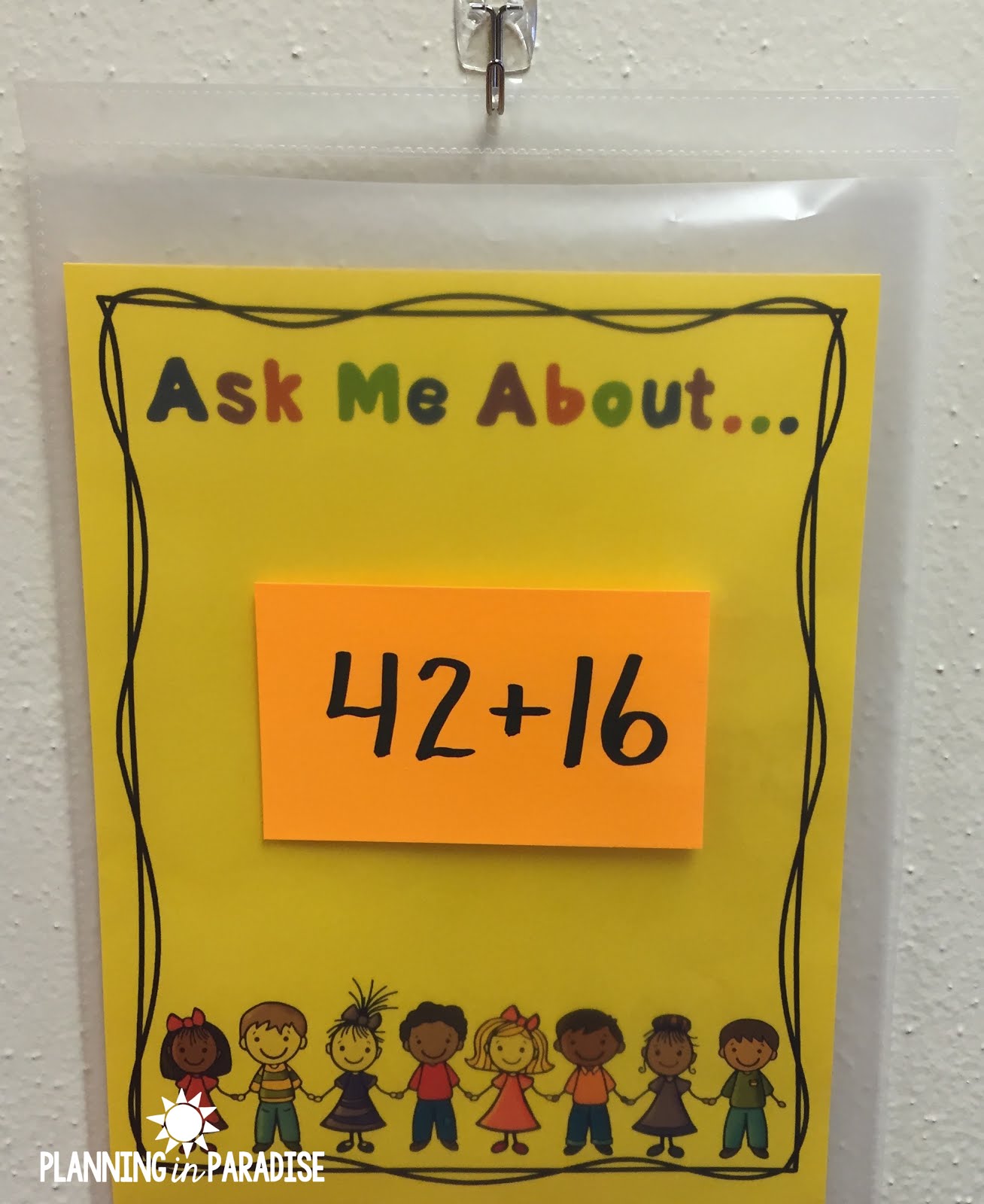
Another way we share our passion is by displaying the titles of our current or favorite reads outside our classroom doors.  Each teacher has a clear pocket that hangs on a contact hook with an “Ask me about…” page inside.  We tuck in a picture of our book cover or the actual book itself.  This has encouraged student and staff conversation about books.  What more could you ask for?


A few ingenious folks have used this same “Ask me about…” idea to teach vocabulary words, generate student excitement for learning a foreign language with a new word each day, and encourage different ways to solve math problems.  I’m sure there are even more things you could do!


Click here for a copy of this FREE Ask Me About page!


To capture favorite quotes from our reading or our own creations that we pen (see Shelley’s post, "Eight Great Quotes" from February 15th, for some wonderful ideas), we’ve created another display.  This has been a great way to share the words that touch us, without interrupting instruction or reading time.  Students know they can write down their quotes and stick them in our basket to be shared during those filler moments like lining up for lunch or the few minutes before dismissal.  After our quotes are shared, they get posted on the board!


We want our students to read, read, and then read some more!  It is our hope that we are creating a passion that will last a lifetime!  


Click here for a FREE download of this goal setting sheet!

I would love to get some more ideas to keep the passion alive (remember, we’re talking about literacy!).  Comment and share!


Sunday, June 28, 2015

shopping in the classroom library


I've been teaching first grade for a long time and I've had so many guided reading groups, I probably talk about it in my sleep.  Doesn't your "guided-reading-talk" spill over into other parts of your life, too?  My own children, who are not in elementary school anymore, will ask me homework questions like, "What does perseverate mean?" and "What's an algorithm?" and I instinctively respond, "Well, what strategy can you try to figure that out?"  I know they wish I'd check my teacher-hat at the door.

(Confession:  Sometimes I don't know the answers to their hard homework, so my response is really a win-win for everyone.  My kids learn to be resourceful and I don't look dumb.)

The work we do during our guided reading groups is so important, I want to make sure the children have a lot of additional time to read a lot of books that are just-right for them... books that will help them grow as readers and continue to foster a love for reading.

It's critical that all of my students have a handy collection of books to read at any given time and I've structured our schedule and classroom environment to make sure that happens daily.  A well-stocked classroom library, with a wide variety of books, is the most important part of making this a reality for my kids.  My classroom library isn't just in one part of the classroom... I've got shelves and bins and cubbies of books all over the place.  (Don't worry... it's organized.)  There's a fiction section, a nonfiction section, a section of favorite authors and one for favorite characters, and we have a leveled books section, too.

When I first started teaching (forever ago), I made my fair share of rookie mistakes, one of which was letting children choose ALL of their own books, ALL of the time.  It seems like a good idea, right?  And don't I want "buy-in?"  I mean, what's so hard about choosing books?  I do it myself all the time.  

But I'm an adult.

And they're six.

And I soon figured out something important about new, emergent readers... they don't always know how to pick out books that are going to help them grow.  It doesn't really make a lot of sense to read with children in a guided reading group on Level E books and then watch them self-select 10 Junie B. Jones chapter books from the classroom library for their personal reading collections.  That offers them little chance of practicing proficient reading behaviors on their own. And then I realized, little kids need a little help when shopping for their books.

(You should know:  I take great care at the beginning of the year making sure our classroom culture is safe and encouraging.  We talk about individual strengths and needs and how people, including myself, set goals for areas where we want to continue growing.  We value differences and celebrate everyone's successes, big and small.  These are the kinds of conversations that need to take place so my students understand why different students have different books at different times.  They make great connections when we talk about how training wheels and swim floaties come off at different times for different kids.  And it's important that children are keenly aware of what their peers are good at and that there's a spirit of collaboration and camaraderie in the classroom.  When that is missing, competition creeps in and that's why some of our emerging readers are choosing 100-page Junie B. Jones chapter books and pretending to read them during reading workshop.  There is a place for chapter books in their reading lives, and I'll explain how I honor that in just a minute, but a large amount of time spent pretending to read isn't really helping anyone.)

This is when I started using "Shopping Cards" and I've been using them for years because they work so well for us.  Here's how they work in our room:


After I finish my initial running records at the beginning of the year, I make a shopping card for each student.  The last letter on the card indicates the child's instructional reading level... the level we're working on during our guided reading time together.  This is the level that "pushes" the reader just a bit because it's a level where they need to be actively using strategies to read and make sense of the text.  

The other two levels are just slightly lower than their instructional level. Reading books at these levels strengthens their confidence, helps them read sight words more automatically, and improves their fluency (both rate and expression).  

The cupcake represents something we call "Dessert Books."  (Hello, Junie B.)  To help them understand this, we have fun talking about desserts... about how they're not the best part of our daily diet, but how we want them anyway, don't we?  We talk about how it's important to have a balanced diet and how it's okay to have dessert once in a while as long as it's not the thing we're eating most often.  They understand how that's unhealthy for our bodies.  And then I make the leap to a healthy reading diet... and they're able to leap with me... they get it. They learn that a healthy reading diet has to be full of books that are just-right for us; that are good for us; that will help us grow.  Dessert books may not be just-right for us, but they're a fun treat to have if we have just a little.

Each week, my students go shopping in our classroom library for their own books.  (I have 5 student teams, so one team goes each day.  This prevents the library from feeling too crowded.) They pick their own books (buy-in) with a little guidance from me... so much better than what I did my first year of teaching. Students self-select 3 books from each leveled bin on their own shopping card and then they head over to the fiction / nonfiction sections of our library and choose ANY 3 dessert books they want.  All the books they choose go into a canvas book pocket that hangs on the back of their chair, along with all the books we've been reading during our guided reading time together. As they grow as readers, so do their cards and they begin to shop for different levels.

When we get ready to go home each day, each child picks one leveled book and one dessert book to take home.  The goal is for them to read their leveled book to a family member and then ask a family member to read their dessert book to them or with them.  

You can make your own shopping cards with a simple index card, but if it would save you some time, you can pick up these blank cards for free in my TPT store.   They go all the way up to guided reading level M, but a lot of students no longer need help choosing books after about levels J or K.  By that point, they're pretty good at knowing what's just-right for their reading diet.  I have also included a completely blank card in case you use a leveling system other than guided reading levels.


If this is the time of year when you think about updating or redesigning your own classroom library, check out this Pinterest board dedicated to special reading spaces for young children.  It is loaded with pictures and links to dozens and dozens of classroom (and home) libraries. They are cozy and inviting and inspiring to young readers.  You'll find great tips for not only reimagining your library space, but organizing it as well.


Happy teaching!  :)


Sunday, May 17, 2015

SpOtLiGhT oN sPeEcH bUbBlEs


Everyone who knows me knows I am in love with Elephant and Piggie.  There are a dozen things to love about these books... the kid-friendly topics, the humor, the facial expressions, the readability for beginning readers... but today, I'm talking about speech bubbles.  Mo Willems, the author of the Elephant and Piggie series, isn't the only one who has figured out the magical appeal of speech bubbles. Kids love them and each year there are more and more children's books written in this style.


Do you know what kids see when they look at this page spread?  White space. And when you're an emergent reader, this calls for a sigh of relief because this book looks like something they can read.  And to them, it looks similar to the comics their older siblings are reading, so it's cool too!  

Do you know what I see when I look at this page spread?  A built-in readers' theater!!  I love the fluency and comprehension development that comes with preparing to "perform" a readers' theater.  When you look through an Elephant and Piggie book (as with many books written in speech bubbles), you'll notice one character's dialogue is a bit more challenging than the others.  In this book, for example, the text level of Elephant's dialogue is more difficult than Piggie's. And the reason that matters is because kids of varying levels can read and process the same text together.  And that's cool to me.

The kids in my class are doing more comprehension work than they sometimes realize when they're practicing their "script."  There's a lot of analysis and inferring that takes place as readers study facial expressions to understand emotions.  They also notice details in the print that would affect how their voice sounds, such as punctuation marks or large, bold words inside the speech bubbles.  And they pay attention to the plot line, tying the emotions and the print features all together so they can make decisions about how their own facial expressions should look and how their voice should sound when reading aloud.
    
If you haven't yet discovered these books, ask your media specialist or visit your local library... your kids will love them.  And there are more than a dozen, so be prepared to become obsessed.  :)  Yo!  Yes? by Chris Raschka is another speech-bubble book my children love to read over and over. (It's even simpler than Elephant and Piggie... perfect for practicing expression related to punctuation.)  Many first and second graders also like the Fly Guy books by Tedd Arnold... they are a mix of speech bubbles and narrative text, so they're perfect for adding in a "narrator."  

And, if your writing curriculum will allow for a brief detour, be prepared... your students may want to try writing their own speech-bubble-stories.  These FREE templates can be downloaded in my TPT STORE... they work well for realistic fiction and/or personal narratives... it's really up to what you're working on at the time.


Do you have a favorite speech-bubble book your kids love?  We'd love to find more to add to our list!

Have fun and happy teaching!  :)


Monday, May 11, 2015

Grab & Go: A Portable LIstening Center

Hi again, it's Robin from Class of Kinders.
I am excited to share a little of my classroom with you.
It seems like there is never quite enough space in my classroom to fit all that I want for my students. I have literacy center time for my Kinders and Firsties because it provides independent practice on skills that I have taught ...and it gives me a chance to meet with my small groups.
The problem is…centers take up space! …valuable space.
The answer for me was a few portable centers!
So,  I created a "listening center" using a shower caddy and an ipod shuffle. 
I just add a book and it is a "grab and go" listening center for my students.
Off they go to find a comfy spot to read!

 My little set up looks like this. I just hang the caddies on the wall:
I got these green and blue caddies from a seller on etsy.com:
You can find her store here at SNAPPYDOTGIFTS.

( I love the READING ROCKS message…don't you? )
You can request which ever wording you wish!

Each caddy contains one book and one shuffle and a pair of ear buds or headphones. 
But if I need more than one student to listen to a story, I can simply at a "splitter." 
It looks like this:
This little green splitter can be found at Walgreens, Walmart or even Amazon. Now, there are two headphones going into one shuffle which allows two students to
listen to one book at the same time. Perfect!

This set up is also wonderful because I can have more than one book available to my students to listen to. It use to be, one book, 4 headphones, and everyone is listening to the SAME story at the SAME time. That's ok, but this works so much better, not to mention it breathes new life into
the listening center.  

I get all of my books on CDs from Scholastic. I usually buy the packs with 4 or 5 books with CDs. These are a GREAT bargain and really good quality literature.
Once I get them from Scholastic, I pop a CD into my computer (I use a Mac), upload it to my iTunes library which saves on my computer. It prompts me each step of the way.

Once it is saved in my iTunes library I click JUST the one book I want. I ONLY put one book on each iPod shuffle…because these little devices can be tricky for little fingers to navigate since there is no window to view the audio selections. One book on the shuffle makes it easy for my students to push play and get busy listening.  And this means less interruptions during my small group time, which is exactly what I need!

Here is the FIRST tab (summary) once I connect my shuffle to my computer:
Then the SECOND tab (music):
And the THIRD tab (on this ipod):
After my students listen to a story in the listening center 
I  ask them to complete a response to the story. (I usually add this part after a while, 
once they get the hang of just using the shuffle and listening to the book.) The response
sheet usually goes with a skill/concept I am teaching.

Here are a few FREEBIES I have found on TpT for your listening center!

I hope this inspires you to create a portable listening center for your classroom! 

…thanks for taking time out of your day to join us in Paradise. 

'till next time,


Tuesday, March 10, 2015

The Love of Reading

One of my favorite moments in paradise is reading. I love to read in bed, on my special chair, on the plane, by the pool, and especially on the beach. Teaching children to love reading as much as I do is one of my very favorite parts of being a teacher. I think the ticket to falling in love with a book is to find the perfect book to hook your readers. Some of my personal favorites for such an occasion are any Piggie and Gerald book by Mo Willems (actually anything by him is great). Thank You, Mr. Falker by Patricia Polacco is a very special book that melts any teacher's heart. (Pretty much anything by Polacco is amazing, as well.) I also love, love, love Kevin Henkes. Lilly's Purple Plastic Purse and Owen are two of my most loved children's books. The list could go on and on. I think the thing that really gets my kids are the voices I make to bring to life the characters in the story. The more dramatic the reading the better. So fun! 

Kids just want to relate to books. Some kids get into the imaginary stories that take place on the pages, while others are intrigued by facts and information. There are so many different genres to explore and to love. It amazes me to see kids completely change their minds about types of books. They may start off telling you that they only read nonfiction. Next thing you know you are introducing Mysteries to your class, and they catch the mystery bug! Showing my students to look wider at reading is another favorite part of teaching.

Another paradise moment for me is watching kids read. It has changed through the 17 years that I have been teaching. I started off in first grade where kids were swatting words with word swatters onto the pages of Big Books. As the kids got a little older in 2nd grade, where I have spent over a decade, the children started reading longer books. Now in 2015, many of my students were reading on our iPads. I don't know how many times I have bickered with fellow teachers about the power of iPads. I know holding a book in your hand is a gift, but holding 100 books at once is priceless! The other great thing about reading on an iPad is how you can change the font to meet the needs of older eyes or to make the font more pleasing to a child with Dyslexia (that really works!). The iPad allows students to use tools like highlighting and note taking, right in the book! I still love reading real books, but for me there is no substitute for iBooks!

Anyway you are reading, whether it is in the bathtub or snuggled up under your desk (if you are a kid... or if you want to hide from your family!), all that really matters is that you are READING. 

So read with or to a friend...

Read with a prop... 


Read from your book basket...

Read on your iPad...

Or Read in a comfy spot...


Until our next moment in paradise...